Matthew Helmke (dot) Net

Random things that interest me.

Programming the Semantic Web

July30

The semantic web. We have all heard about it, the buzz, the hype, and the excitement. Much of it seems well founded once you look deeper into the idea of organizing and making data available in a way that machines can find it, share it, and combine it in new ways that were not considered or even thought of when the data was being collected. This can yield amazing results and discoveries, but to do it, we need to move beyond theory and into practice. That is what this book is about.
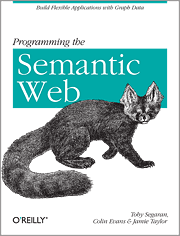
Programming the Semantic Web starts with a clear and practical introduction to the idea of the semantic web that will give any web developer the background necessary to comprehend the potential and usefulness of the concept. This is not a book for complete novices as it does anticipate that the reader will have previous experience with programming for the web, including the concepts of relational databases, familiarity with HTML and XML and perhaps a little RDF, and it would be useful to have some knowledge of Python and/or other computer programming languages.

The first part of the book, about 20% of the text, is dedicated to a discussion of what semantics are, how they can be used to express meaning, and why they have the potential to make data storage easily searchable and allow the discovery of new connections that were not considered during the design or collection stages. We learn here how semantic modeling can be expanded with far less pain than a traditional relational database format, allowing the administrator to adjust interfaces and searches quickly in response to the needs of users.

In Part II, the book discusses the practical technological foundations necessary to begin using RDF and other formats to store data in semantic fashion and make it useful. This involves understanding the libraries available to various programming languages and sources of semantic data from which connections may be made or discovered. One of the really powerful aspects here is that you are not constrained to using data from only one database or server, but when the data is organized and stored in a standardized semantic format such as RDF, it may be made available for reading by anyone (if desired) without any risk of it being overwritten by using a query language like SPARQL instead of the better known SQL.

The rest of the book is where the real meat and uniqueness lie. We need the foundation of the previous parts to be certain that everyone has the same understanding of the philosophy and goal of the semantic web. However, the third part of the book is what makes this discussion unique and useful. Here we get a practical overview of toolkits and examples, both code and frameworks, to enable web designers and data wranglers to begin to use the ideas in real life scenarios. Finally we have a way to move beyond all of the discussions and evangelism into implementation! The examples given are clear, useful, practical, and cover all of the sorts of things one might want to do with data. This section is the reason anyone interested in the semantic web should buy the book, and it is also the reason that anyone buying the book should be familiar with coding for the web. The examples are often given in Python and/or Java, using specific toolkits and frameworks like Sesame. The section describes how to publish for internal use as well as how to format and publish data so that others may use it without risking it being corrupted or changed.

The book ends with a short section intended to separate hype from reality and give some vision for where semantic web design might fit in with other technologies already in use, coming alongside already useful tools, not to make them obsolete, but to make them even more beneficial.
posted under Book/Magazine Reviews, General, Ubuntu Planet | Comments Off

The Official Ubuntu Book, Fourth Edition — first review and more

July21

The new edition of The Official Ubuntu Book has hit the shelves in some places. I just received my copy. I mentioned earlier the Kindle version was available. Today, I’m pleased to mention another format: Adobe PDF. Also, a free sample chapter is available from InformIT, who are also selling the aforementioned PDF.

As the title mentions, the first review I have seen is up at A Million Chimpanzees. Enjoy!

The Official Ubuntu Book – Kindle Edition

July17

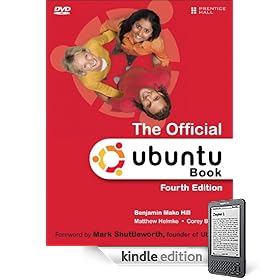
The latest release of The Official Ubuntu Book is now available for your Kindle.

VMware Cookbook reviews beginning

July15

We are already beginning to see reviews of VMware Cookbook, and the book has not yet been released. I’ll post more as I find them.

Thanks, Paul, for your post on your PJSquared blog.

posted under General, Ubuntu Planet | Comments Off

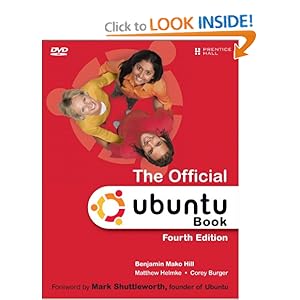
The Official Ubuntu Book, Fourth Edition is available

July10

Ubuntu Book cover

The main Amazon site says it is in stock, and I’m hearing reports of people seeing it “in the wild,” although I haven’t yet received my copy.

This book is perfect for people who are interested, but have no idea where or how to get started with Ubuntu.

Disclosure: For this edition, I had the privilege of editing and updating chapters 1-4, 7, 11, and the appendices, and provided assistance checking the full manuscript, including the final proof, against the final release version of the software covered. I also was the lead contact during the copy edit, index, and final proof and author query stages.

posted under General, Linux / Ubuntu, Ubuntu Planet | Comments Off

An interview with Travis Newman

July8

If you have been around the Ubuntu Forums for a while, you are certain to have come across a person calling himself panickedthumb. Guess who we are interviewing in this edition of Ubuntu Community Interviews?

1. Tell as much as you’re willing about your “real life” like name, age, gender, location, family, religion, profession, education, hobbies, etc.

I’m Travis Newman, 27 years old, living in Radford VA. My wife, Katie, and I have two cats Max and Leo. I’m AVP of IT at a regional bank in the area. In my spare time, which I seem to have little of lately, I’m an avid gamer and internet junkie.

2. When and how did you become interested in computers? in Linux? in Ubuntu?

Ever since I first saw a PC, in first grade, I have been fascinated by them. Unfortunately I didn’t get one until my senior year, in 1998. Back in Sept. ’98 I was having trouble sending email and double-clicking on links. But my lack of knowledge didn’t slow me down. I wanted to know how things worked, what I could and couldn’t do. I ended up using the Compaq restore CD more than I would like to admit, but I learned quite a bit. One thing that I learned was, even though I thought it was all that was available, I hated Windows.  Later that year the network admin at my high school gave me my first Linux CD. Perhaps installing Linux, especially Slackware 3.5, was not the best idea having only *really* used computers for 2 or 3 months, but I did. I was lost. Could never figure out how to start XFree86. But I persisted throughout the years, trying different versions of Red Hat and Mandrake, and many others, and by 2003 I was using Gentoo pretty much full time.  In 2004 I heard about this new distribution (which would become Ubuntu) that was starting up based on Debian, and I decided to give it a shot. My experience with Debian was not a good one, but I had hoped this new distro would help with that. It was still at no-name-yet.com, before being called Ubuntu, but I was hooked. It was very rough around the edges, but I could see the diamond in the rough. Never looked back.

3. When did you become involved in the forums (or the Ubuntu community)? What’s your role there?

I joined the forums October 27th, 2004, less than a month after it started, though I had been lurking for a bit before then. I became a moderator at some point in November, and have been one ever since, with the exception of a few months a couple years ago.

4. Are you an Ubuntu member? If so, how do you contribute? If not, do you plan on becoming one?

I am an Ubuntu member. I contribute as a moderator on the forums, and I started and co-admin the Ubuntu LoCo team for Virginia. Come by #ubuntu-us-va on Freenode the first Tuesday of every month at 8 if you want to join in the fun! :)

5. What distros do you regularly use? What software? What’s your favorite application? Your least favorite?

I use Ubuntu, and that’s really about it. I try other distros here and there. I absolutely love what they’re doing with Arch Linux, and I’m interested to see where Moblin goes for netbooks. However, since trying Ubuntu for the first time, nothing else has felt like “home.”  My favorite software is probably Firefox, and I know that’s a bit of a cop-out since it’s so popular, but I don’t even like browsing the web without it anymore. Least favorite software? Adobe Reader. Seriously, a document reader should not be so bloated and finicky.

6. What’s your fondest memory from the forums, or from Ubuntu overall? What’s your worst?

I don’t have a single fondest memory from Ubuntu or the forums. It’s a great place and I really feel at home there, so I have many fond memories just being part of the wonderful community and contributing as I can. However, one particularly funny memory, that’s kinda hard to explain, was the :porc::inca::dito::love: mystery. Someone in the #ubuntuforums channel started pasting what appeared to us to be random stuff, like the above. It’s still an inside joke to those who were there. I know it doesn’t sound that funny, but I guess you had to be there :)   Worst memory… well with a forum this size, there are some troublemakers and there are occasionally interpersonal conflicts among staff. I won’t go into any details, but those are rough to go through, and they are ultimately not good for the community. Luckily, much has been done over the years so that we have fewer and fewer problems.

7. What luck have you had introducing new computer users to Ubuntu?

Its a struggle sometimes, because for all its faults, Windows is pretty easy to use. Taking some people out of their comfort zone is like pulling teeth. I have had a few converts over the years, and helped get CD’s to a lot of students at a local community college. However, as I have seen over the years, getting someone to *try* Ubuntu doesn’t mean that they will stick with it. One of the most heart warming things for an Ubuntu user ever, though, was at our LoCo installfest in Galax for 9.04. A middle-aged couple had bought a netbook and hated the default Asus version of Xandros, and came by to get Ubuntu Netbook Remix installed. While that was going, Jim Tarvid (the other co-admin of the group) and I got wireless working on their Ubuntu laptop. People over 40 are frequently the hardest to try to convert, but this couple had basically done it on their own, and just needed a little help.

8. What would you like to see happen with Linux in the future? with Ubuntu?

I think it’s on a good path for the most part. I would of course like to see Bug #1 (https://bugs.launchpad.net/ubuntu/+bug/1) taken care of. It seems that every time Microsoft releases something new, we get a lot of new Ubuntu users. I think business as usual is not working as well for Microsoft anymore, and they need to change their game plan if they want to stay on top for the foreseeable future. But ultimately, I’d like to see Ubuntu (or Linux in general) get a 10% market share. I don’t mind if we never get to 50% or even 25% really, I just want enough so that businesses take us seriously and support the platform.  More than just Ubuntu or Linux, however, I would like to see Free software become the standard for software development. I really believe it’s the way of the future, and all of the best software available is Free (as in freedom, of course).

9. If there was one thing you could tell all new Ubuntu users, what would it be?

Don’t give up! I know it’s disheartening at times when you feel like you’re in over your head, but the forums, the mailing list, and the IRC channels are here to help.  Also, get involved! You feel much more a part of the community when you give back. When you become comfortable with Ubuntu, you can help others out. It’s what makes the community work.

The Manga Guide to Physics

July7

What a fun book series this has been to read and review! I have been impressed by the book series so far and its treatment of the various topics. This may be my favorite of the series, although I will be reading The Manga Guide to Calculus later in the summer or early fall, so I won’t yet make that a definite statement.

As with the other books in the series, this book uses well drawn manga art to introduce and give a context for presenting the material–in this case, Newtonian physics.

The Manga Guide to Physics does not require knowledge of calculus for most of the book, although there are a few times in which knowledge of mathematics higher than algebra and geometry would either be useful, or in a couple of places necessary (such as during the discussions of springs and the conservation of energy).

I would not consider this book to be useful as a beginning physics textbook, but for anyone who has taken a high school course, it will be a useful way to review for a final exam and learn a bit more than would have been studied in the year long course. If you have completed a university basic course in physics that uses calculus (not the non-calculus version for non-science majors), this book will be below you. If you are reviewing for that non-science major course, you may find this book extremely useful and a fun way to help shore up and retain your studies.

Topics covered in the book include all the basics: Newton’s Three Laws of Motion, gravity, force and motion, inertia, momentum, impulse, energy, work, and so on. There is also a useful appendix titled Making Sense of Units, which helps the student do exactly that.

I haven’t taken a physics class since 1990. I’m sure I would have difficulty trying to pass the final exam for Physics 101 at the university based solely on my memory. After reading this book, paying careful attention to the examples and working through the problems in each along with the characters in the story, I believe I might be able to do it. That’s pretty good for someone so rusty. I think the book would be extremely useful to a student with less time between now and a careful study of the material in a class setting, especially someone preparing for exam time or who had or is having difficulty absorbing the topics and principles involved in basic physics.

There are a couple of weaknesses in the book. Some books in the series provide study questions for readers/students to answer on their own, with solutions in the back of the book. This one does not, so you have to pay careful attention and choose to work through the examples as they are discussed. The other weakness is that most basic physics courses will cover, at least in my memory, an introduction to electronics and electricity. This book does not, probably because there is a separate book in the series dedicated to that topic and because it really doesn’t fall under the precise topic of Newtonian physics, even though it is covered in those elementary physics courses. That’s it. Otherwise, I can recommend the book without reservation.

posted under Book/Magazine Reviews, General, Manga, Ubuntu Planet | Comments Off